
ERC Calls for Reinstatement of Instagram Reel Restricted in India
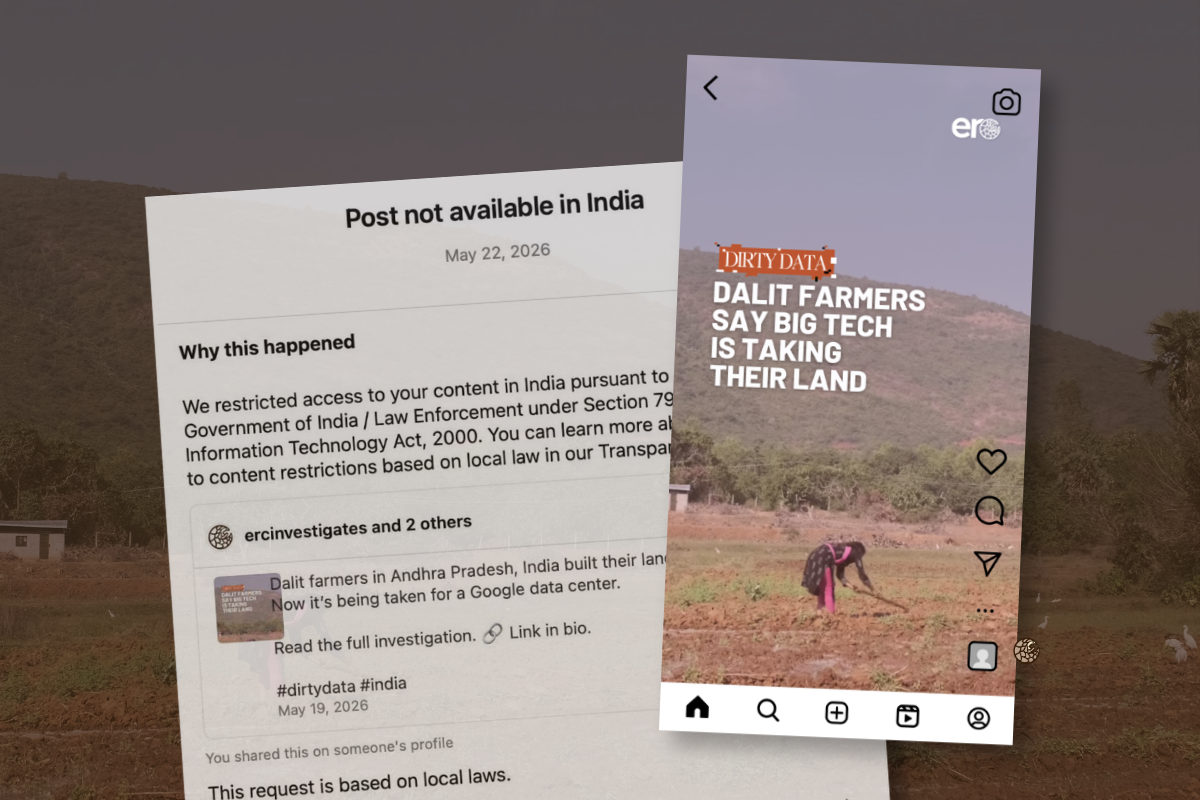
The Environmental Reporting Collective (ERC) expresses serious concern over the lack of transparency surrounding Meta’s decision to block access in India to an Instagram reel connected to our cross-border investigation into the environmental and social impacts of data center expansion.
The two-minute reel, taken from video reporting by our partners Shamsheer Yousaf and Monica Jha from India, examines a proposed Google data center project in Visakhapatnam (Vizag) and its reported impact on Dalit lands and local communities. The reel was published on May 19, 2026, collaboratively across Shamsheer’s as well as the ERC’s social media platforms as part of our global “Dirty Data” investigation, which examines the human and environmental costs of the rapidly expanding data center industry.
The video gained significant public attention, particularly on Instagram, where it went viral the following day and has since recorded more than 2.6 million views. On May 22 at approximately 2.00pm, ERC received a notification stating that the reel was no longer available in India.
The notification stated that the video had been restricted pursuant to a notice from “The Government of India/Law Enforcement under Section 79(3)(b) of the Information Technology Act, 2000.”
At this time, ERC has not received any detailed explanation regarding the legal basis, policy rationale, or specific complaint that led to the restriction of the content in India.
ERC stands firmly behind the reporting and editorial processes underpinning this investigation and accompanying video. The work was produced through a rigorous journalistic process involving extensive field reporting, documentation, interviews with affected communities and relevant stakeholders, editorial review, fact-checking, and cross-border collaboration among experienced journalists and partner newsrooms.
We believe transparency and accountability are fundamental principles when decisions are made to restrict access to public-interest journalism, particularly reporting concerning environmental governance, land rights, infrastructure development, and the experiences of marginalized communities.
The lack of clarity surrounding this restriction raises broader concerns about the mechanisms through which journalistic content can be limited from public view, especially when such reporting addresses issues of significant public interest.
We call on Meta and the relevant authorities to provide greater transparency regarding this decision and to reinstate access to the video in India. ERC is also currently seeking legal advice regarding this matter.
ERC remains committed to responsible, evidence-based reporting and to supporting journalists and communities whose stories deserve to be heard.